Horse country is how this town is laid out, not a weekend attraction. Hitchcock Woods sits in the middle of the city so a hack does not need a trailer. Whitney Field still runs Sunday polo on the oldest continuous ground in the country. The training track on Two Notch sent Derby horses north. Show rings fill from January through April, then again in the fall. A relocator’s map of where to watch, walk, and board — then pick the street that backs up to a barn.
12 places in Aiken horse country
Open
In the middle of Aiken
Hitchcock WoodsGateway Park
About 2,100 acres · no cars · horses have the right of way
Thomas and Louise Hitchcock gave the town a pine-and-sand forest so the Winter Colony would always have a place to hack without leaving the city. Sand trails under longleaf and live oak run from South Boundary almost to the training track. Walkers are welcome; yield to horses; dogs on a leash. Enter at Gateway Park on South Boundary or the Clyburn Gate off Dibble. Dawn and dusk are the horse hours — you will hear hooves before you see them. The Aiken Hounds still drag-hunt through here in season; if you hear a horn, step off the trail.
Club in Aiken since 1882 · Sunday chukkers in spring and fall
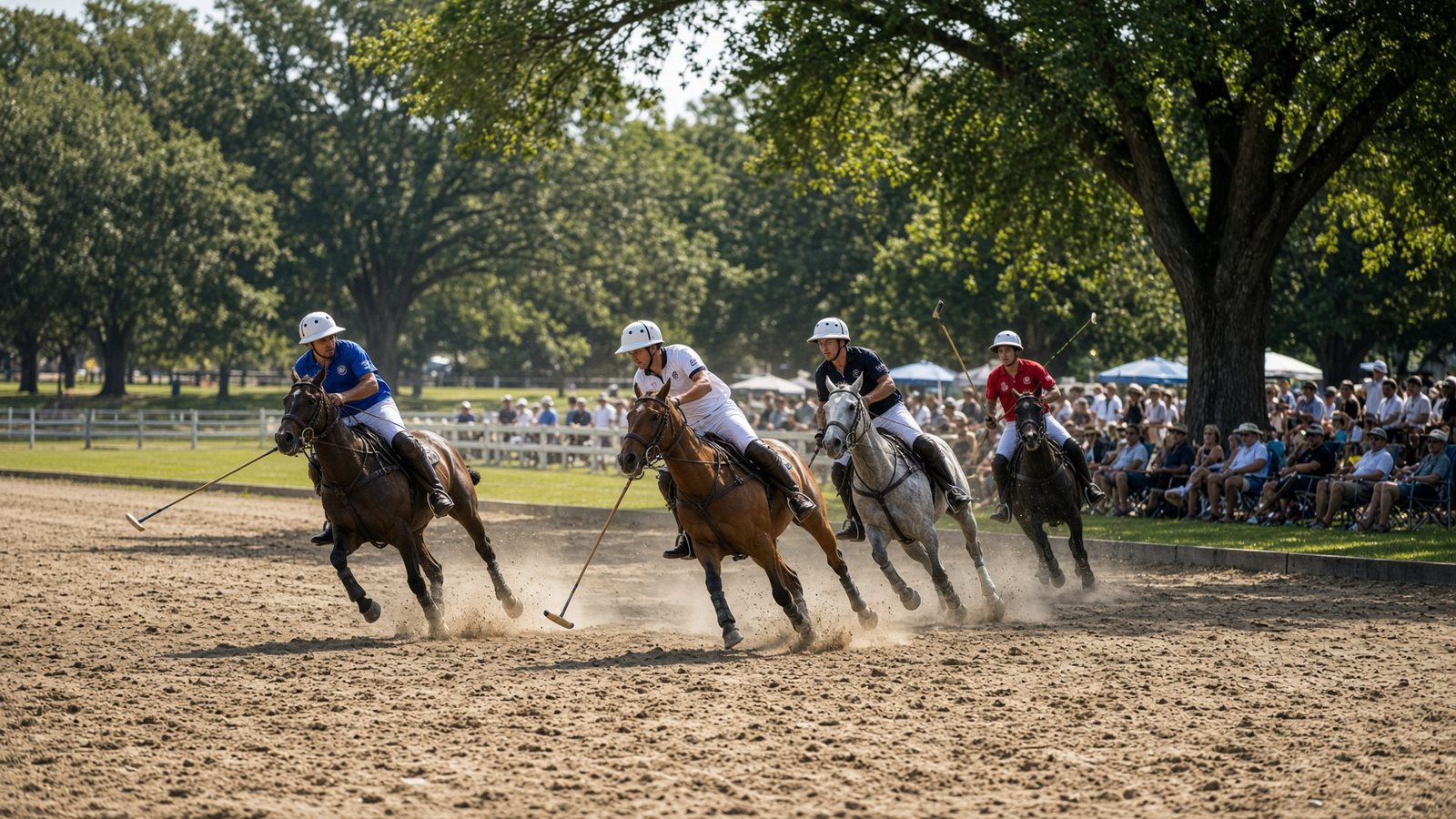
Whitney Field is the oldest polo ground in continuous use in the United States. Sunday afternoons in season: pavilion opens at 1, games at 2 and 3:30, usually two matches, 90 minutes to two hours. General admission, field-side parking, and pavilion tickets are on the club calendar — wet ground cancels. Stay fifteen feet off the boards; ponies do jump them. Weekday stick-and-ball happens on Powderhouse. Seven of the twenty-one American 10-goal players have wintered in this town. Bring a chair or a tailgate, not a drone.
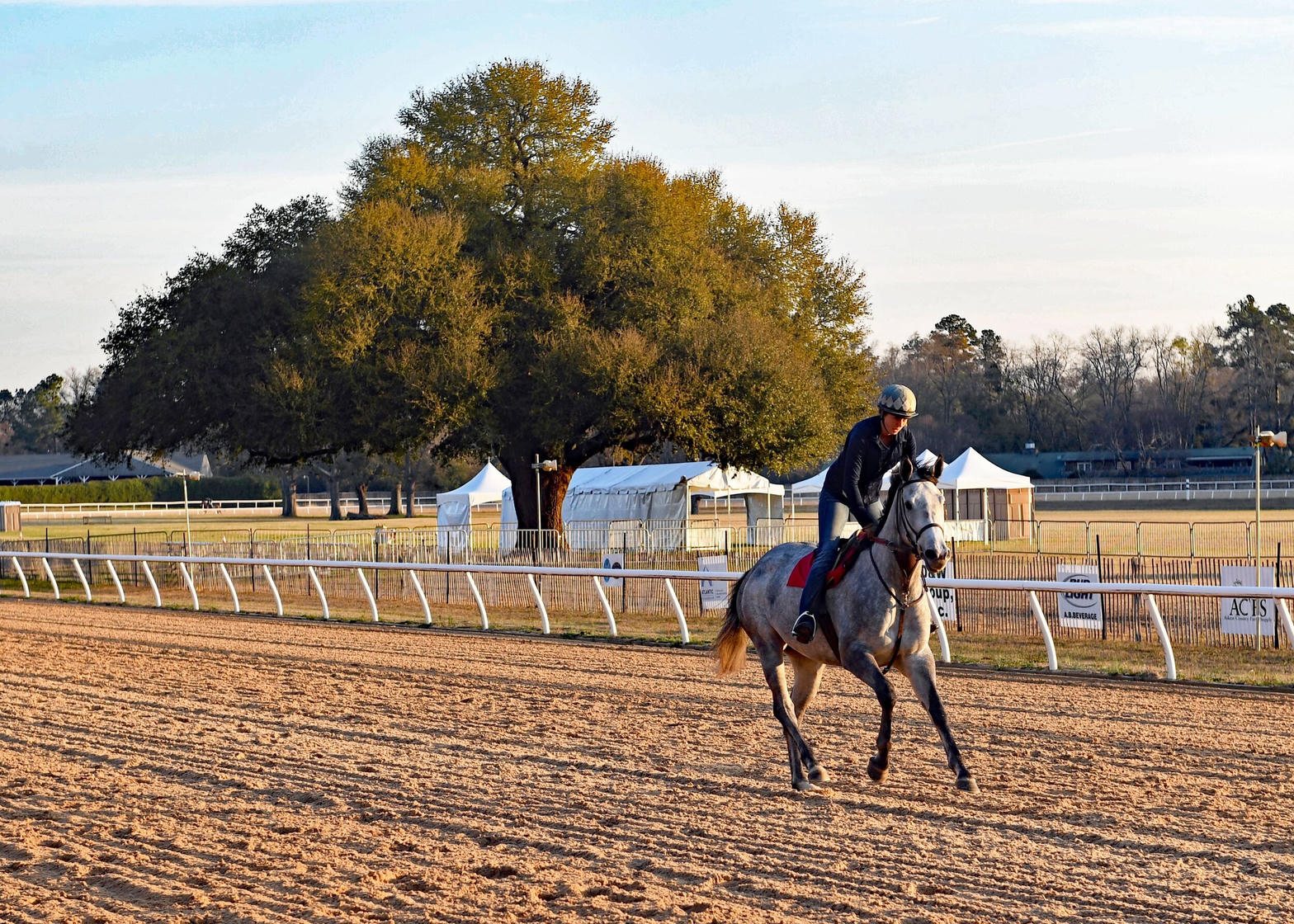
Privately owned. Yearlings learn the gate, older horses lay up, and dirt roads around the property mean a horse never has to put a hoof on pavement. Shut Out left here and won the 1942 Derby. Forty national champions later went into the Hall of Fame down the street. The March Aiken Trials are the public’s look at the barn; Breakfast at the Gallops and historic-barn walks run on published mornings. The rest of the year you watch from the rail only if a trainer invites you. Office hours are weekday mornings. This is a working track, not a park.
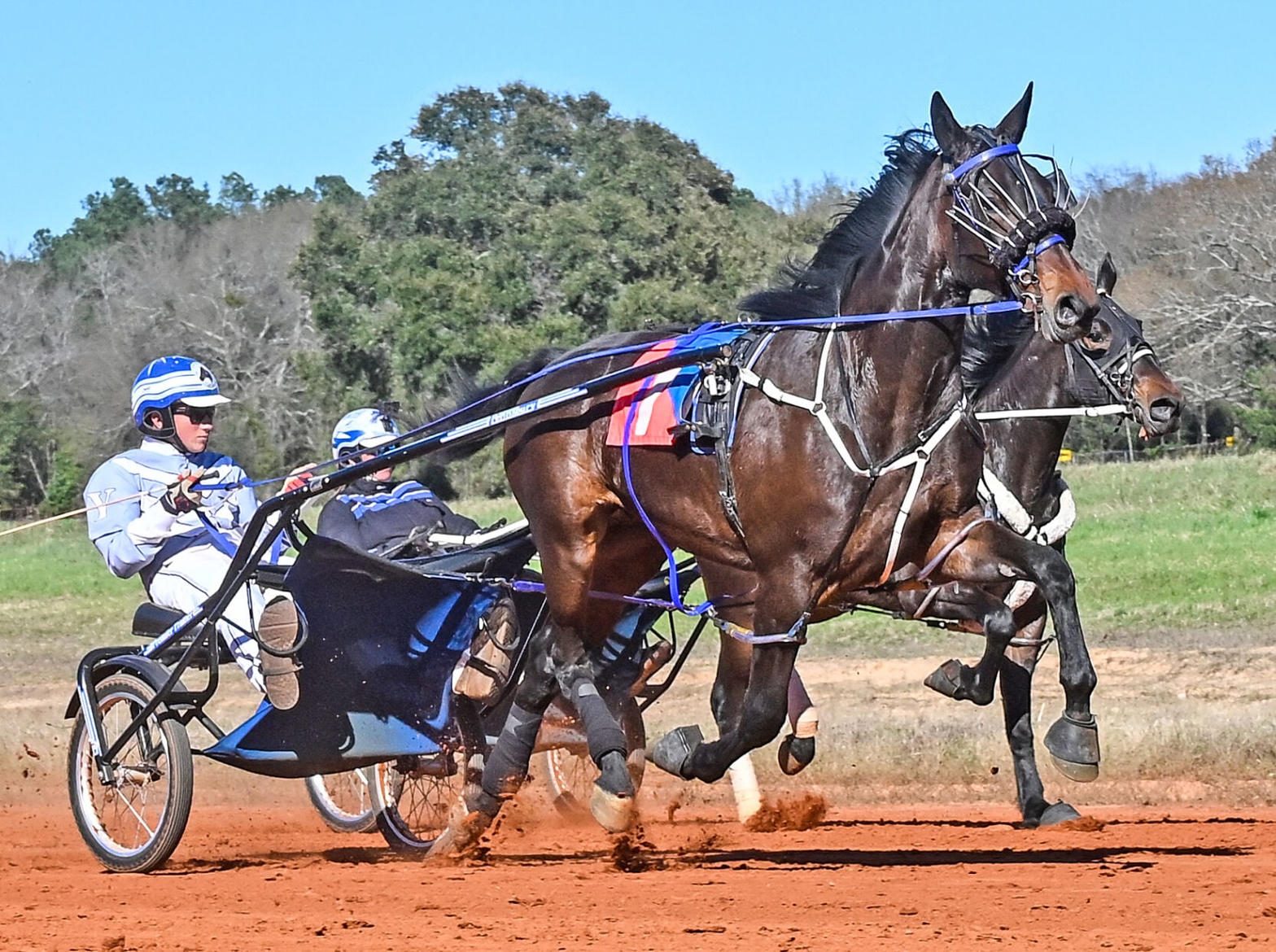
Harness racing’s Aiken address. The McGhee family bought the old Aiken Mile Track in the 1970s and still trains Standardbred trotters and pacers here — three surfaces, paddocks, and living quarters for extended stays. Roughly 150 horses winter on the place. The public day is the March harness meet: mile heats, sulkies, tailgates on the rail. The rest of the calendar is a working farm. Polo strings have also been stabled here. Confirm with the farm before you arrive; do not treat the oval like a public park.
NSA dates · Imperial Cup in March · Holiday Cup in the fall · gates 9, first race ~1
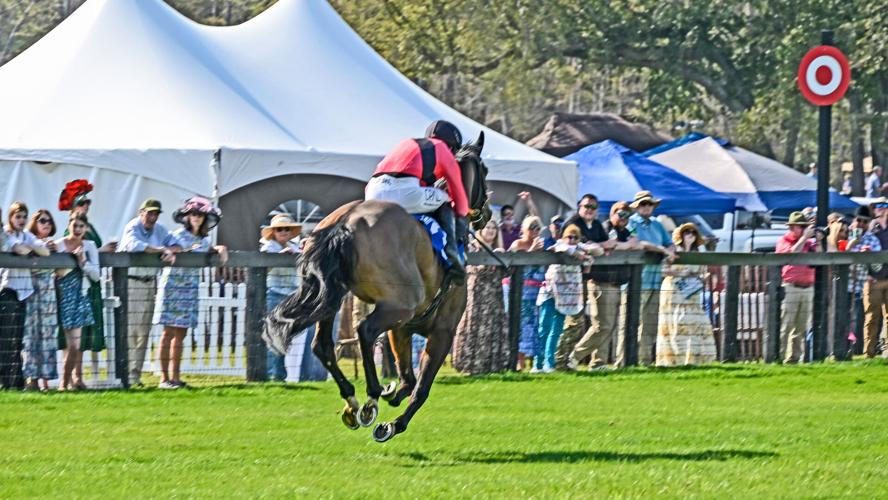
Aiken’s largest single-day crowd. The association formed in 1930 — the first race ran through Hitchcock Woods — went quiet during the war, and came back in 1967. Two National Steeplechase dates a year: timber, brush, hats, and infield tailgates. Railside is reserved; general admission watches from the marked crossings. Kids’ stick-horse, a hat contest, and a corgi race if they run it. Between meets the racecourse is quiet. Tickets and parking live on the association’s page — buy there, not from a reseller in a lot.
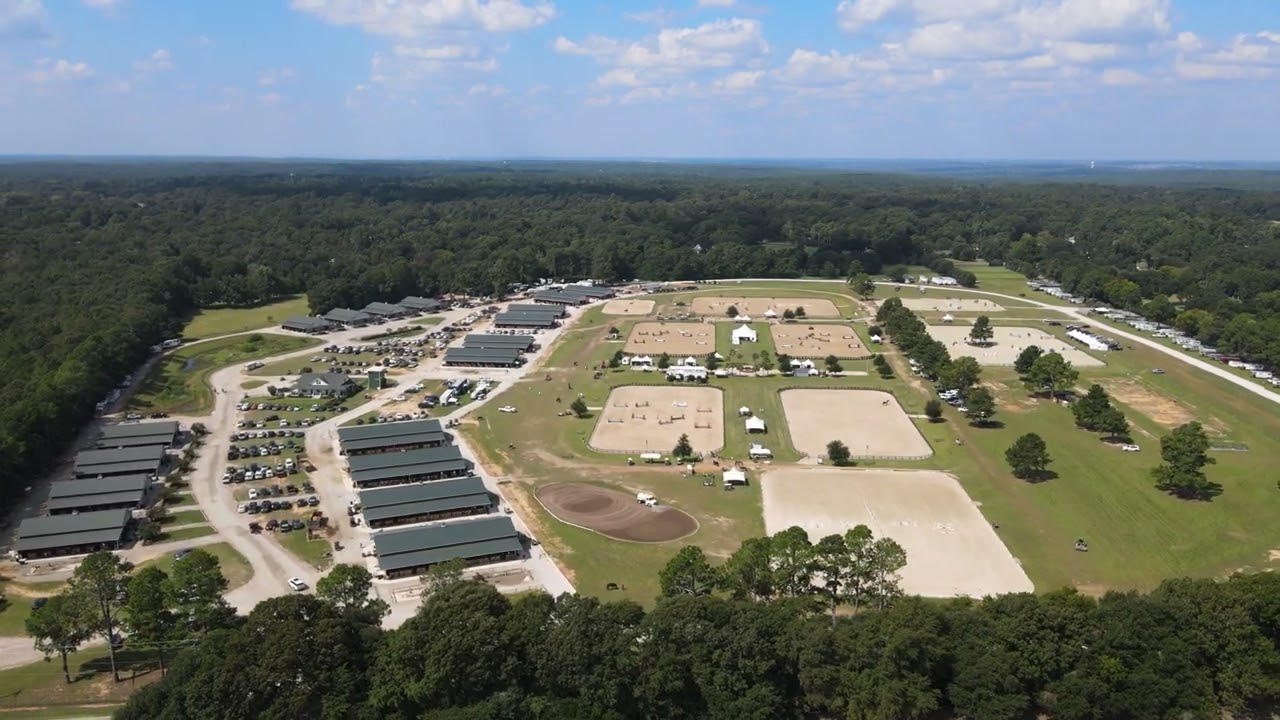
Bruce Duchossois bought this 66-acre winter-colony field in 2000 and put it in a foundation so the rings would outlast him. Hunter-jumper weeks, dressage, the Eventing Showcase, Aiken Charity Horse Shows, fall festivals, and Tuesday schooling in winter. Spectators are free on most show days; the park is closed to riding outside official events. Dogs on a leash. This is the venue people mean when they say Bruce’s Field — historic-district sand, rebuilt as a modern park.
74 acres · 8 blocks from Laurens · 4 all-weather rings, grass jumper and derby fields · RV hookups
Home of Progressive Show Jumping since the 1980s — schooling divisions through nationally rated hunter-jumper. Four rings, a grass jumper field, a derby field, four permanent barns, turnout, an open-air pavilion from 2016, and 30- and 50-amp RV hookups for the Florida-to-Northeast layover. Schooling by appointment when a show is not on. The center also leases for clinics, stick-and-ball, and non-horse events. If Horse Park is the historic-district showgrounds, Highfields is the working circuit a short hack from downtown. Southwest gate on Gaston.
Eventing, hunter-jumper, covered arena, cross-country · spectators most show weeks
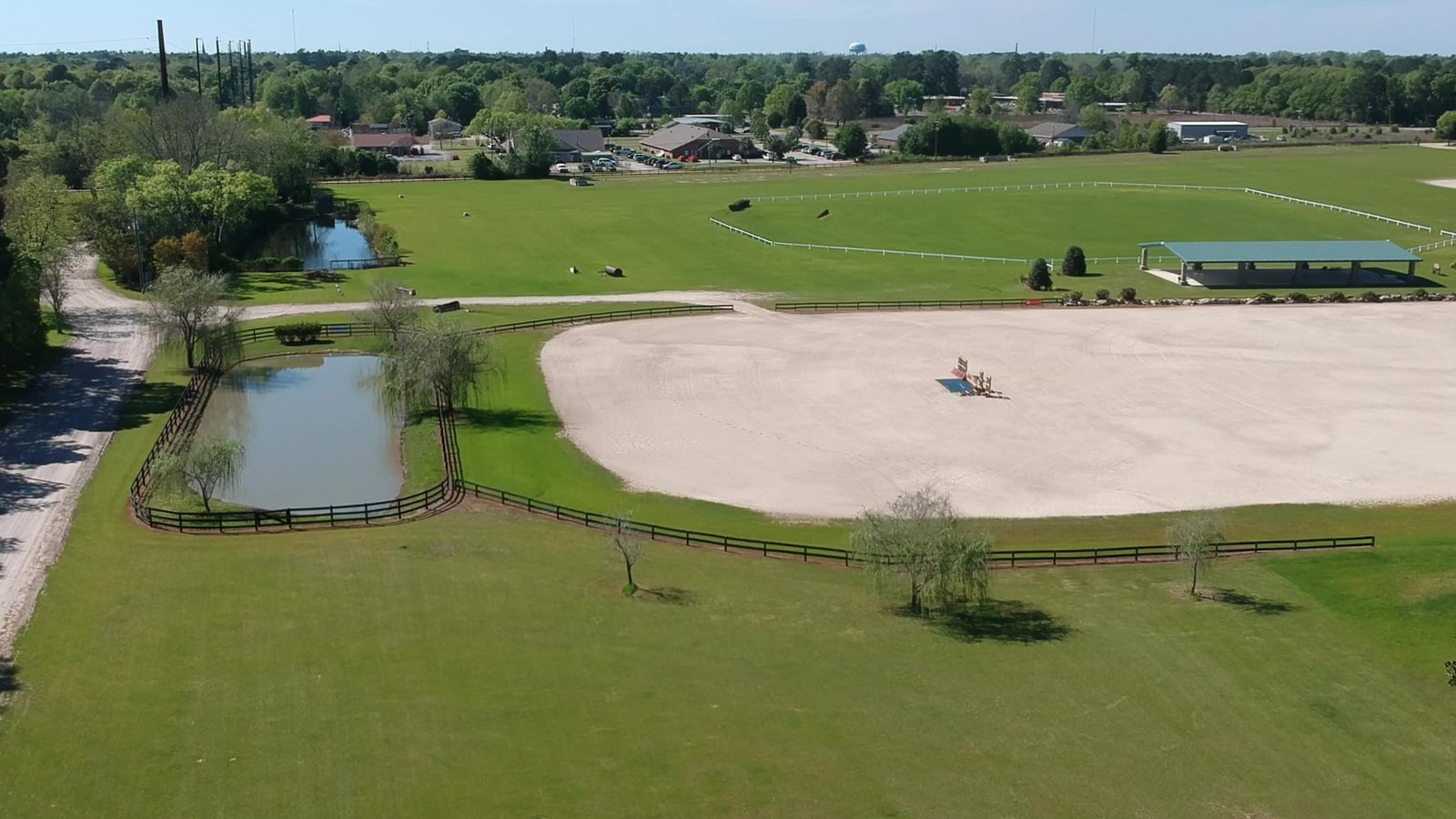
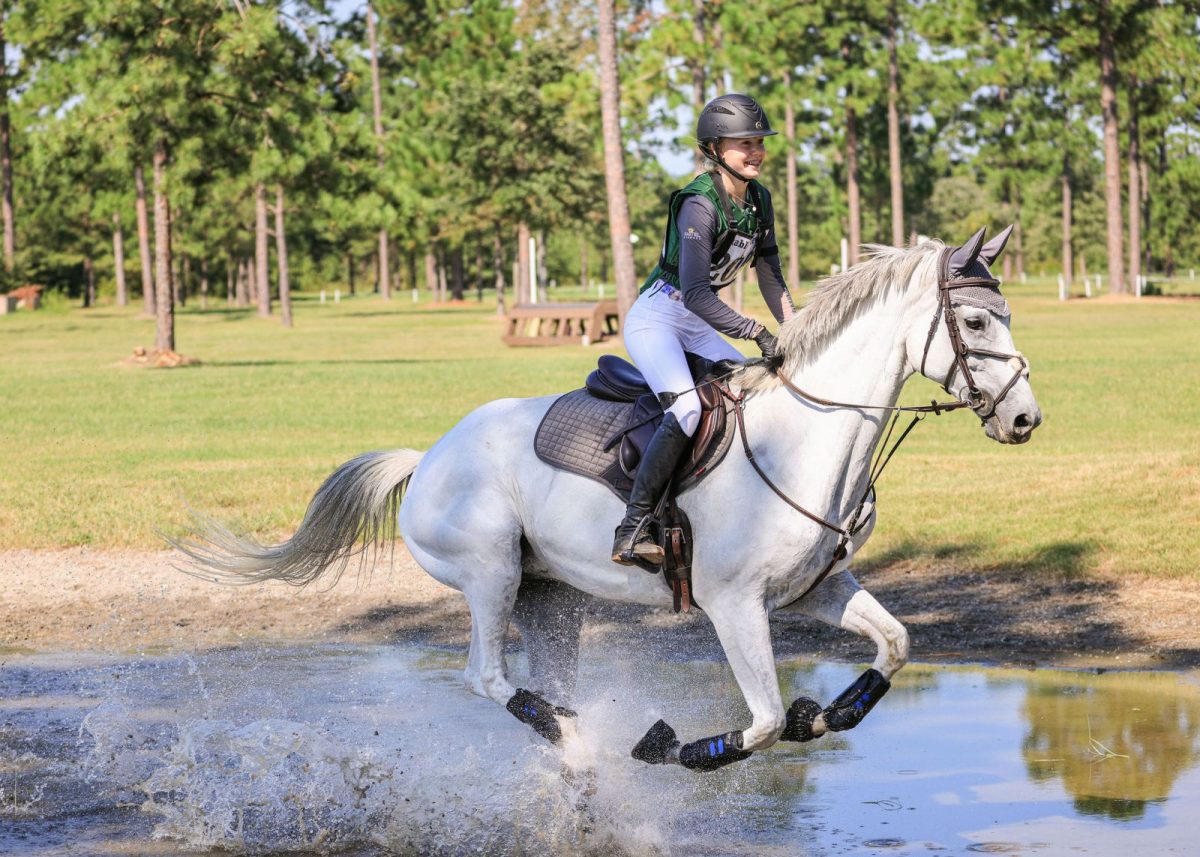
The south-side three-day yard. Water complexes, banks, a covered ring, and a calendar that draws riders from the East Coast winter circuit. Eventing Academy and rated horse trials run here; hunter-jumper weeks fill the rest. Walk the cross-country when a show is on; stay off fences when it is not. If you are shopping land south of town, this is the neighbor you will hear on a Saturday morning. Check the farm calendar before you drive.
Free · Tue–Fri 2–5, Sat 10–5, Sun 2–5 · 40 Aiken-trained national champions
A museum in the old Hopelands carriage house. Induction is strict: the horse had to train in Aiken and be named a national champion or Eclipse Award winner. Swale, Tom Fool, Forty Niner, Gallorette, Conquistador Cielo. Courtyard of Champions, Whitney Tower, rooms for Dogwood, Bostwick, and the African-American horsemen who built this industry. Walk the gardens first, then go inside. It is the indoor half of the story that started on Two Notch Road.
Nine 19th- and 20th-century carriages · Sundays 2–5, March–November · free
A restored garage-stable with grooms’ and chauffeur’s rooms from the Rogers estate. Surrey, pony phaeton, village cart, pony rockaway — some restored by Clifford Gerde, a founding member of the Aiken Driving Club. Club members sit the Sunday shift and will talk shop if you ask. Pair it with the Hall of Fame next door: same block, two centuries of how Aiken moved by horse. Heat and rain close it; confirm the Sunday before you go.
Brick U-plan barn · National Register 2020 · working carriage lift · tours by appointment
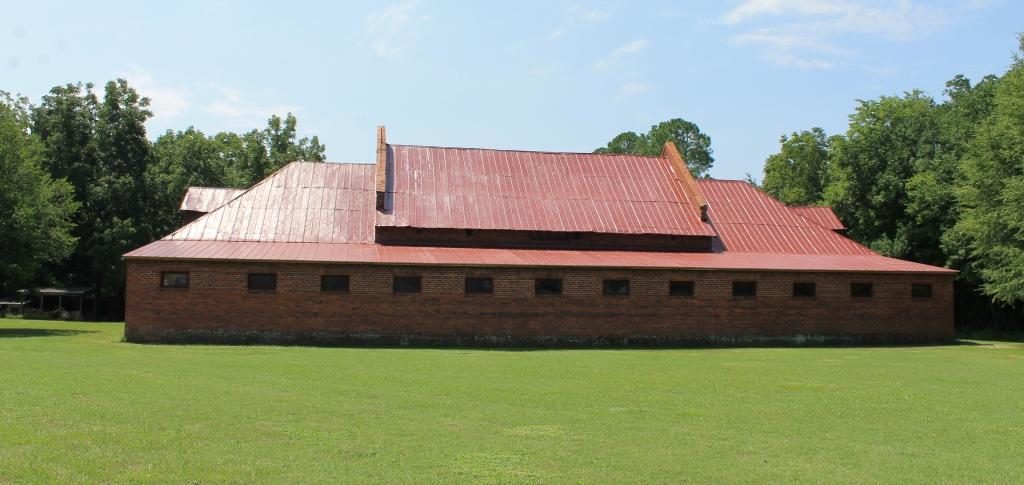
Jonathan Steadman put a wooden barn here around 1893. It burned in 1909; the Gastons rebuilt it in brick. Two-and-a-half stories, 10,000 square feet, a U-plan rare among American barns, and a carriage lift that still sends vehicles to the second floor. D.W. Gaston, Sr. and Jr. ran a full-service livery until 1932 — boarding, sale stock, and carriages for the Winter Colony. Friends of the Gaston Livery host market days and music. It is a working piece of the city’s transportation history, not a stage set. Confirm open hours; it is not a daily museum.
Opened 2006 · Tue–Sat 9–1, walk-in tour · closed Sun–Mon · groups over 8 email first
Abuse and neglect cases, owner surrenders, and off-the-track Thoroughbreds learning a second job. Walk the barns, ask about a horse, bring a carrot if they say you may. This is why people move here with a trailer and why some never leave — Aiken still makes room for the horse that is not a show prospect. Volunteer days and foster notes live on the rescue’s page. Do not show up with a trailer unannounced.
Training barns and showgrounds are working farms. Hours, tickets, and access change — confirm on the venue’s own page. LIVE Equestrian estates still maps horse-property homes. Nick Williams helps you buy the house by the barn, not a stall.

 Open